Instruments
The Keyboard Instruments I Play
The instruments I play belong to a different world.
The piano today has a largely standardized structure. Its size,
touch, and sound vary only subtly between makers, and instruments
are produced in series. In essence, there is one instrument: the
piano.
I perform on three types of historical keyboard instruments: the
harpsichord, the clavichord, and the fortepiano, most often in the
form of the square piano. While they all share a keyboard and are
housed in wooden cases, this is where the similarity ends.
Each of these instruments represents not a single model, but a whole
family. Their forms vary widely depending on time, place, building
traditions, function, and taste. As a result, each instrument offers
a distinct sound world and requires its own approach to playing.
Until the end of the eighteenth century, music was often written
simply for keyboard and could be performed on whichever instrument
was available. Yet the same piece can sound strikingly different on
each, not only because of the instrument itself, but because each
one invites a different musical response.
Harpsichord
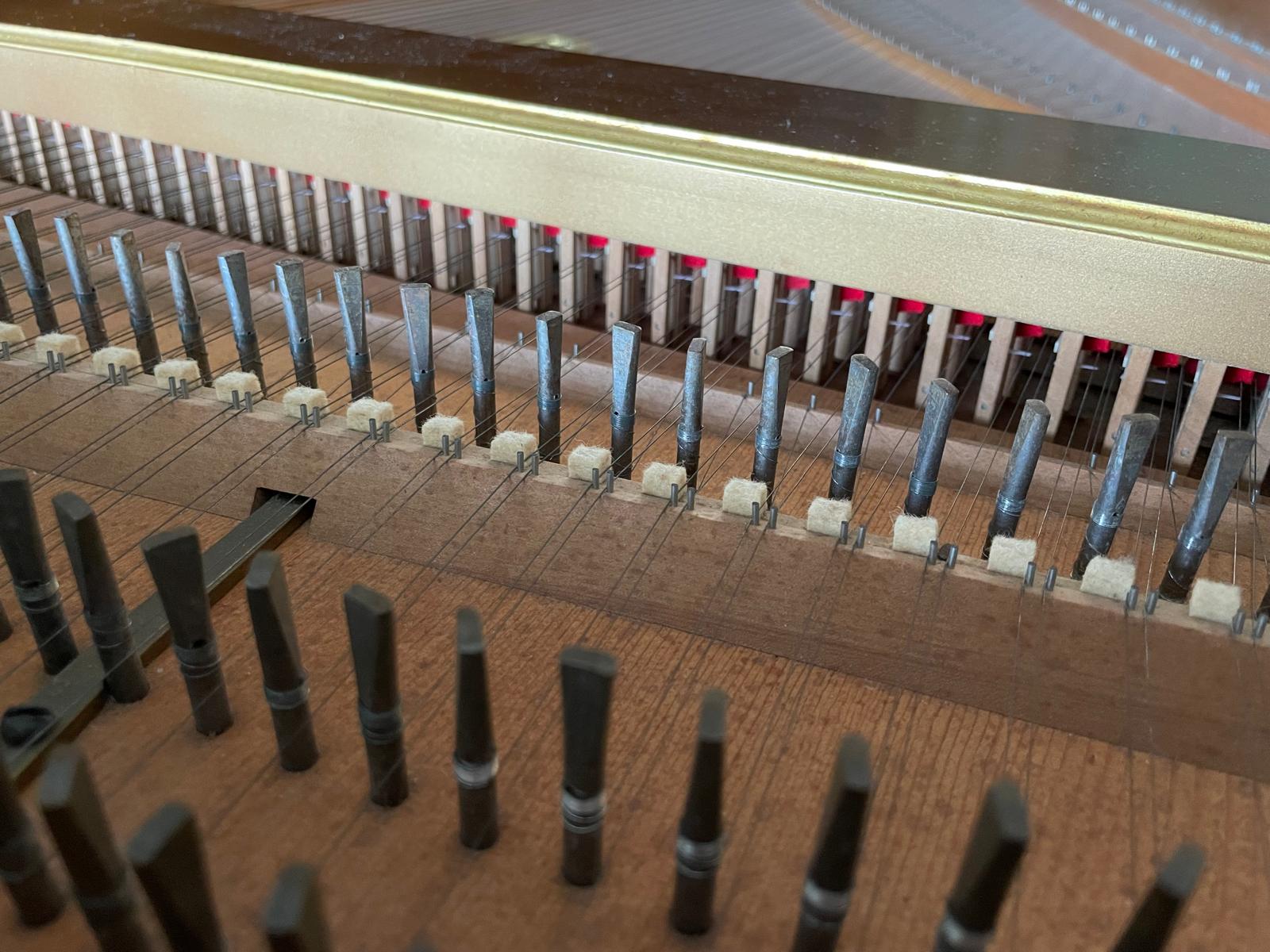
The sound of the harpsichord is produced by plucking the strings.
When a key is pressed, a small mechanism, the jack, lifts a plectrum
which plucks the string.
The instrument exists in many forms, differing in size, shape, and
internal design. The spinet belongs to the same family, sharing the
same plucking principle in a more compact and differently shaped
case.
The harpsichord offers clarity and brilliance, and a wide palette of
colours shaped through articulation and timing.
I am particularly drawn to the harpsichord’s ability to fuse
individual voices into a single, living sound, shaping polyphonic
music into an organic whole.
Clavichord
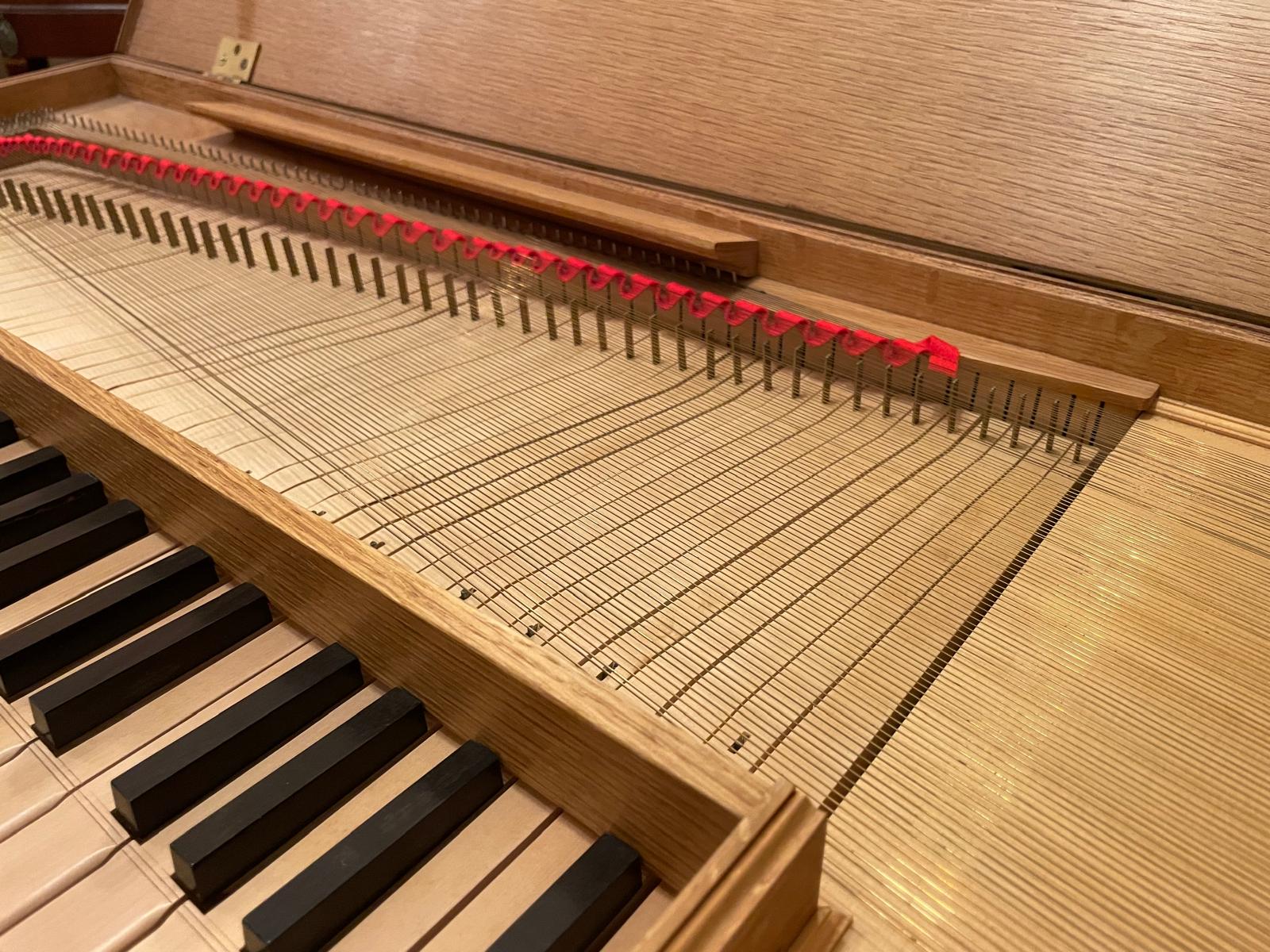
The clavichord produces sound in a completely different way.
A small metal blade, the tangent, strikes the string and remains in
contact with it, setting it into vibration.
It is a very quiet instrument, intended primarily for private use.
Its sensitivity allows for subtle control of sound, including
delicate nuances of touch and expression.
I love the intimacy and delicacy of the clavichord. It is an
instrument for reflection, for understanding music from within, and
for the quiet hours of the day.
Fortepiano
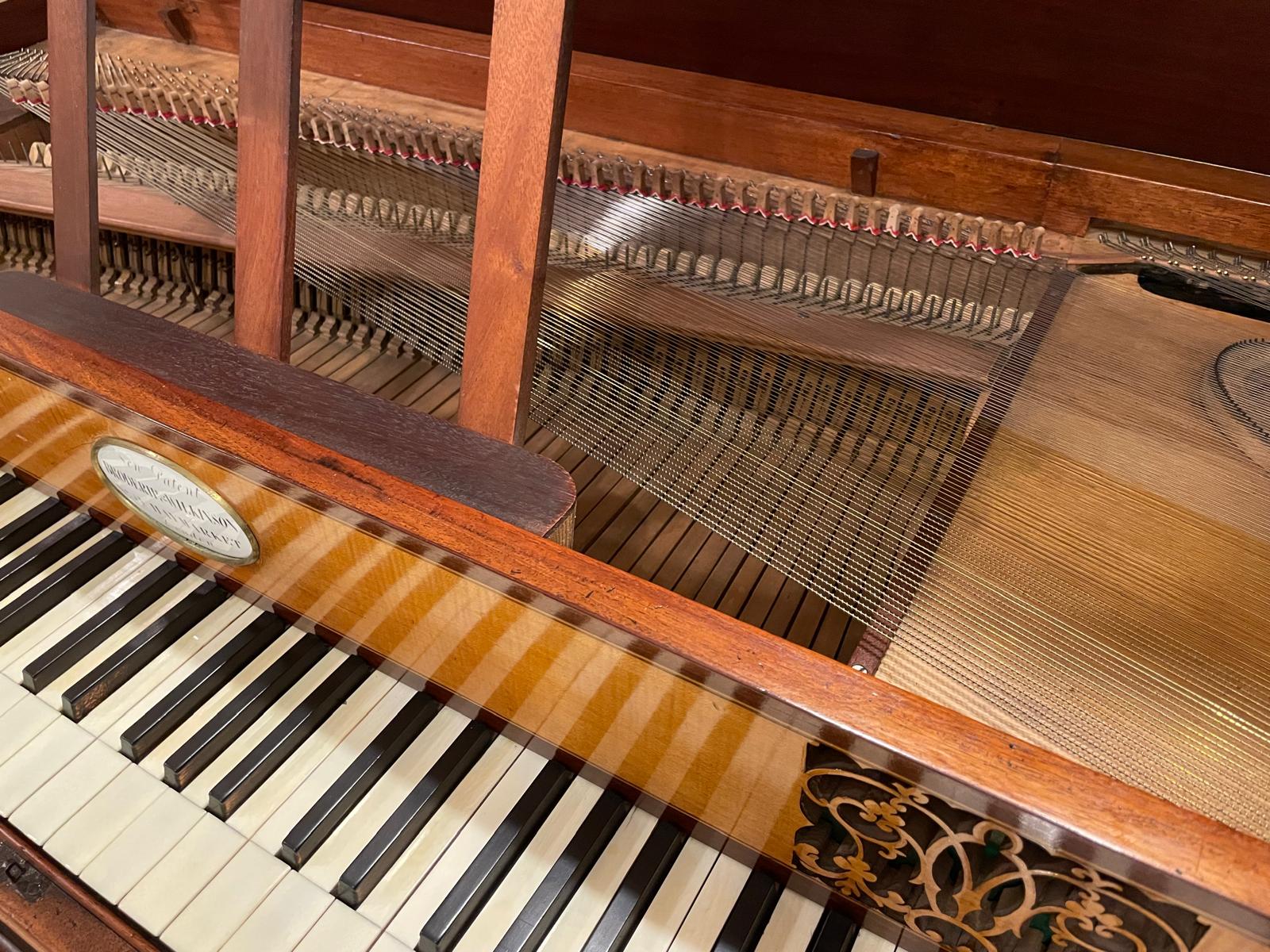
The fortepiano produces sound by means of hammers striking the
strings, the principle that later developed into the modern piano.
Early fortepianos differ greatly from today’s instrument in
construction, touch, and sound. The square piano, in particular, was
extremely popular in the eighteenth century.
Its sound world is lighter and more transparent than that of the
modern piano, with a distinctive clarity and resonance.
I am drawn to the silvery sound of the early piano, whose lighter
construction allows a richness of colour quite different from that
of the modern instrument.